01 / SESCA / AI SYSTEMS
Turning documents
into software knowledge.
I built core features of SESCA, an AI platform that turns specifications into business rules and test cases that teams can review, trace, and use.
What I set out to solve.
I worked with long DOCX specifications where business rules were difficult to track and changes were expensive to analyse. My challenge was to turn those documents into structured requirements and tests, while preserving the context teams needed to review each result.
What I built.
I designed and developed generation workflows, document versioning, and conversational tools across the Angular interface, Java backend, and data model. I built asynchronous processing with controlled concurrency and recovery, worked directly with stakeholders, and mentored an intern through implementation and integration.
Make change a first-class part of the system.
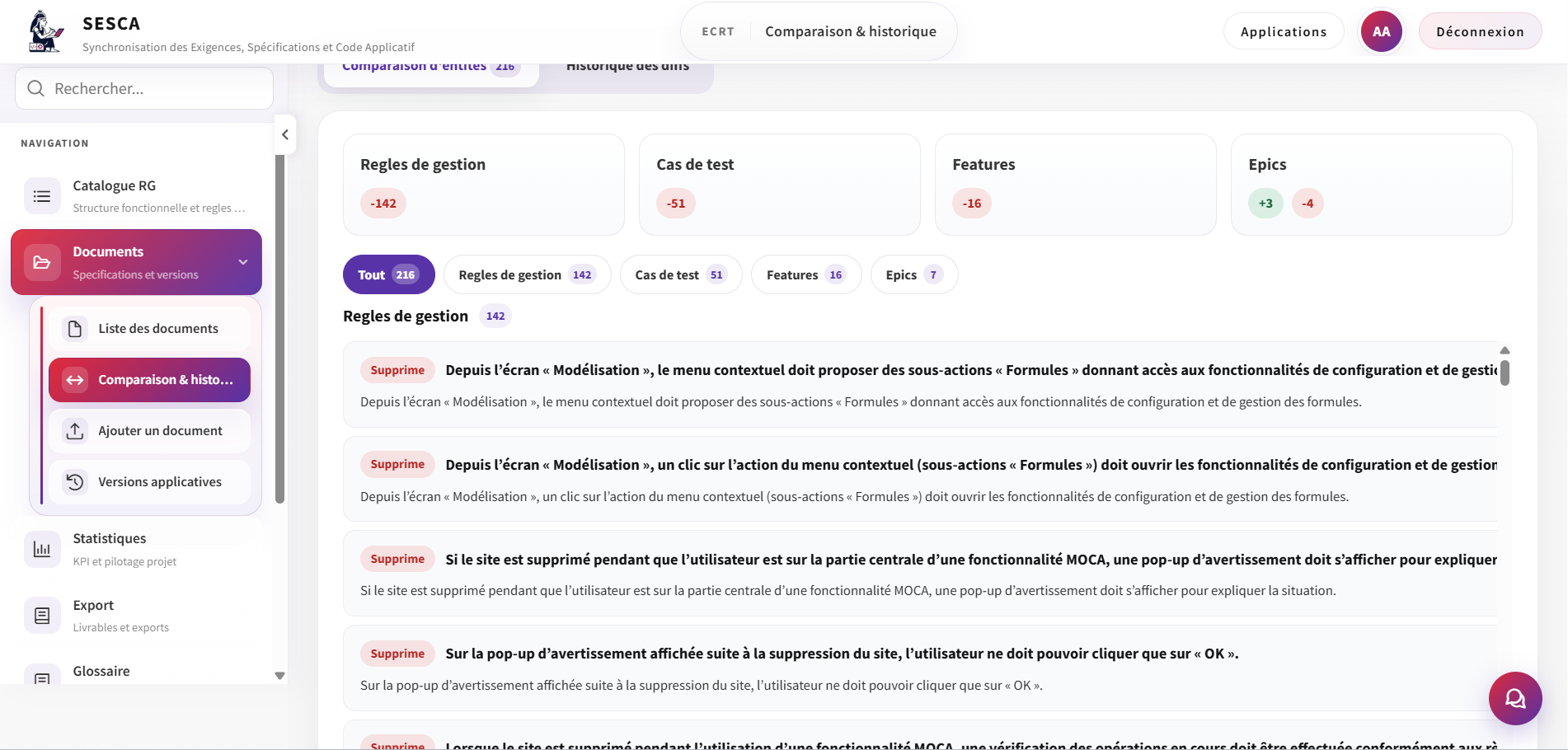
I built the comparison pipeline to distinguish changes in wording or position from changes in business meaning. I started with deterministic matching, added semantic analysis, and used an LLM to resolve ambiguous cases. This let me preserve unaffected work, reduce unnecessary model calls, and give users a clear decision to review.
See what changed, and where.
I made version changes visible across business rules, tests, features, and epics, so users could review the affected content in one place.
Structure the source
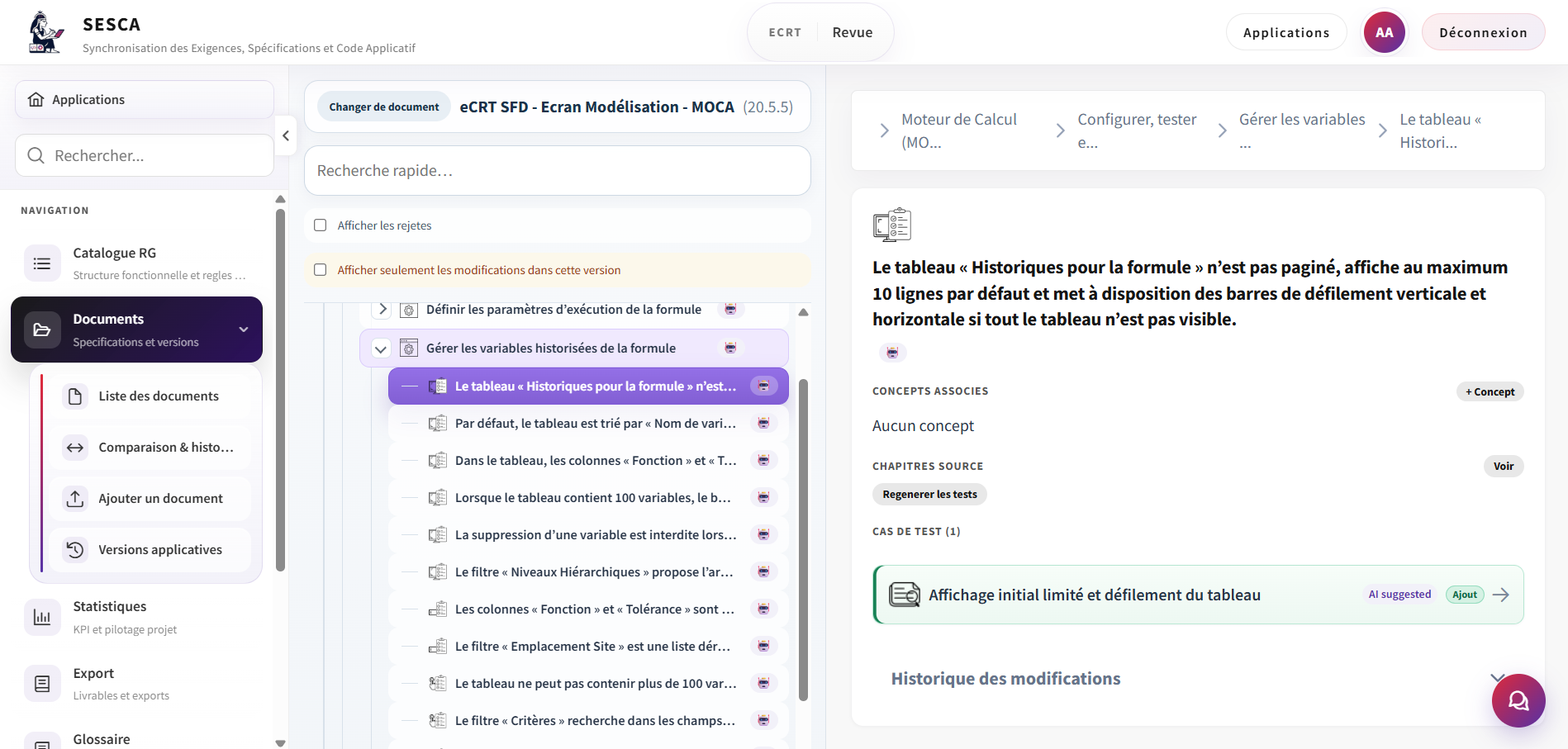
I structured generation around epics, features, business rules, test cases, and test steps, with traceable relationships and a review stage for users.
Persist progress
I controlled parallel execution, saved intermediate results, and added locks and targeted recovery. I used Server-Sent Events to make progress visible in the interface.
Follow the changes
I combined hashes, titles, numbering, and position with batched embeddings and detailed text comparisons. I reserved LLM arbitration for changes that remained ambiguous.
Keep people in control
I built application-scoped copilots with MCP tools and clarification steps. Changes were prepared as drafts and required user validation before they were applied.
Keep the rule and its tests connected.
I connected the requirements hierarchy to a detailed review workspace, giving users access to the source chapters and generated tests behind each rule.
From a revised specification to a usable test book.
I connected versioning, review, and export so teams could follow a requirement from its source document through to its tests.
Import with context
I tied each specification to a document, version, and target module, giving generation a clear source and business context.
Compare the versions
I made changes visible across epics, features, rules, and tests, with access to the affected content for detailed review.
Review the proposal
I gave users a way to inspect generated rules, validate changes, and refine requirements with AI assistance.
Export into the workflow
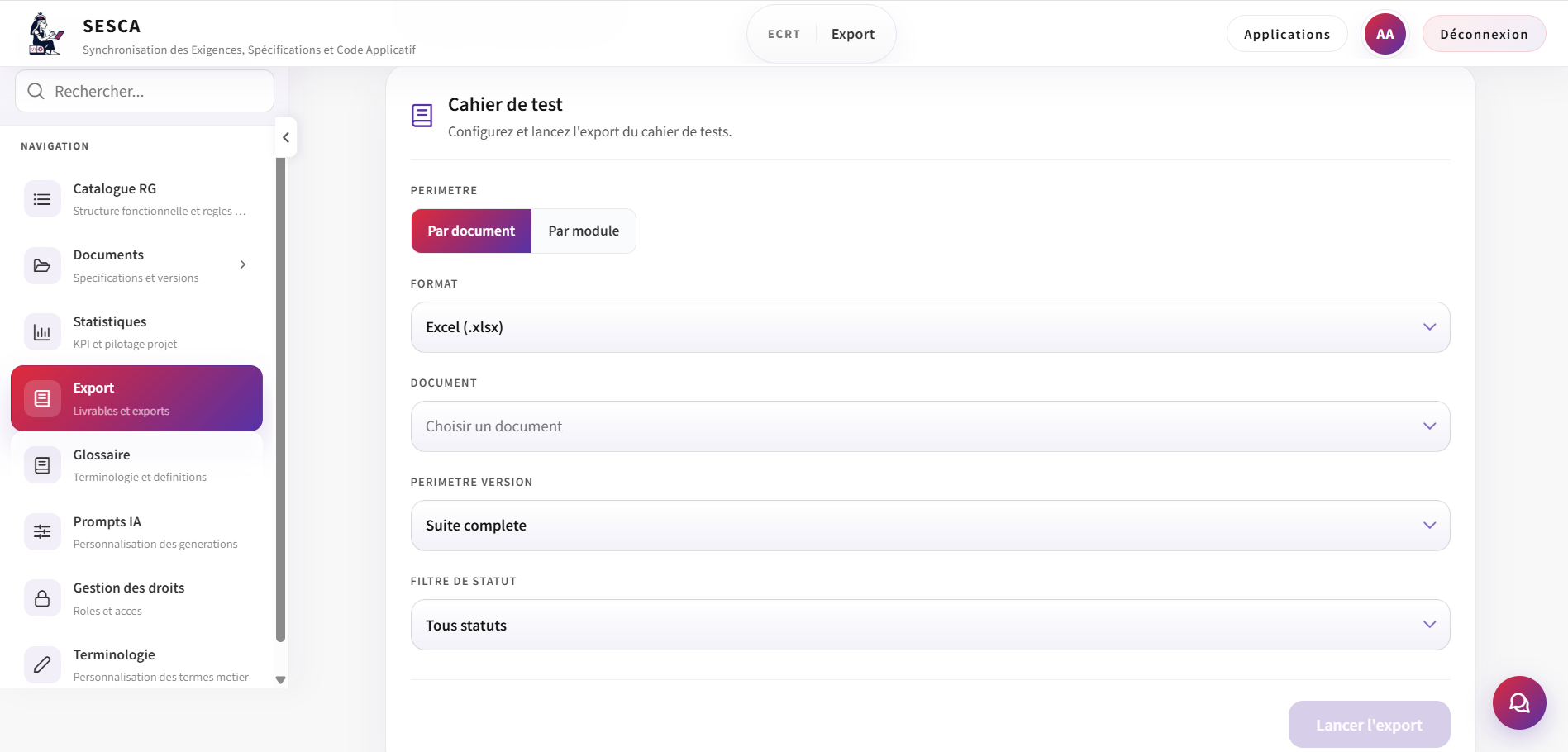
I worked on a delivery workflow that produced Word and Excel test books and Xray-compatible imports, with configurable scope, versions, and filters.
How I checked the work
I combined structured-output checks with unit, controller, and integration tests. I also used functional scenarios and human review to check AI results before they moved into the testing workflow.
Turn reviewed requirements into test deliverables.
I worked on the export workflow so teams could choose their scope, format, version, and status filters before producing a test book.
What I delivered.
With the SESCA team, I helped deliver a platform used on a major client release to review business rules, generate manual test books, and import tests into Xray. We shortened test preparation and enabled developers to take on part of test execution. My work connected AI generation to a workflow the project team could actually use.
I’m always happy to talk through the engineering. Let’s talk